Why labels still lift in a freezer at minus eighteen
Lifted corners and peeling labels in a minus 18 degree warehouse are routine complaints. The first instinct is to ask for a stronger adhesive. Switching rarely fixes it, because the cause is usually spread across three points.
Application temperature comes first. Low-temperature adhesives fall into two groups: those applied at room temperature that survive cold storage, and those applied in the cold. The first type costs less but needs an application area above 5 C, and the goods should stay out of the freezer for 24 hours. The second uses a cold-grade acrylic that works down to about minus 10 C, at a higher unit price, and it needs a dry surface. Frost acts as a separating layer: the label sticks to ice, the ice melts, and the label slides off.
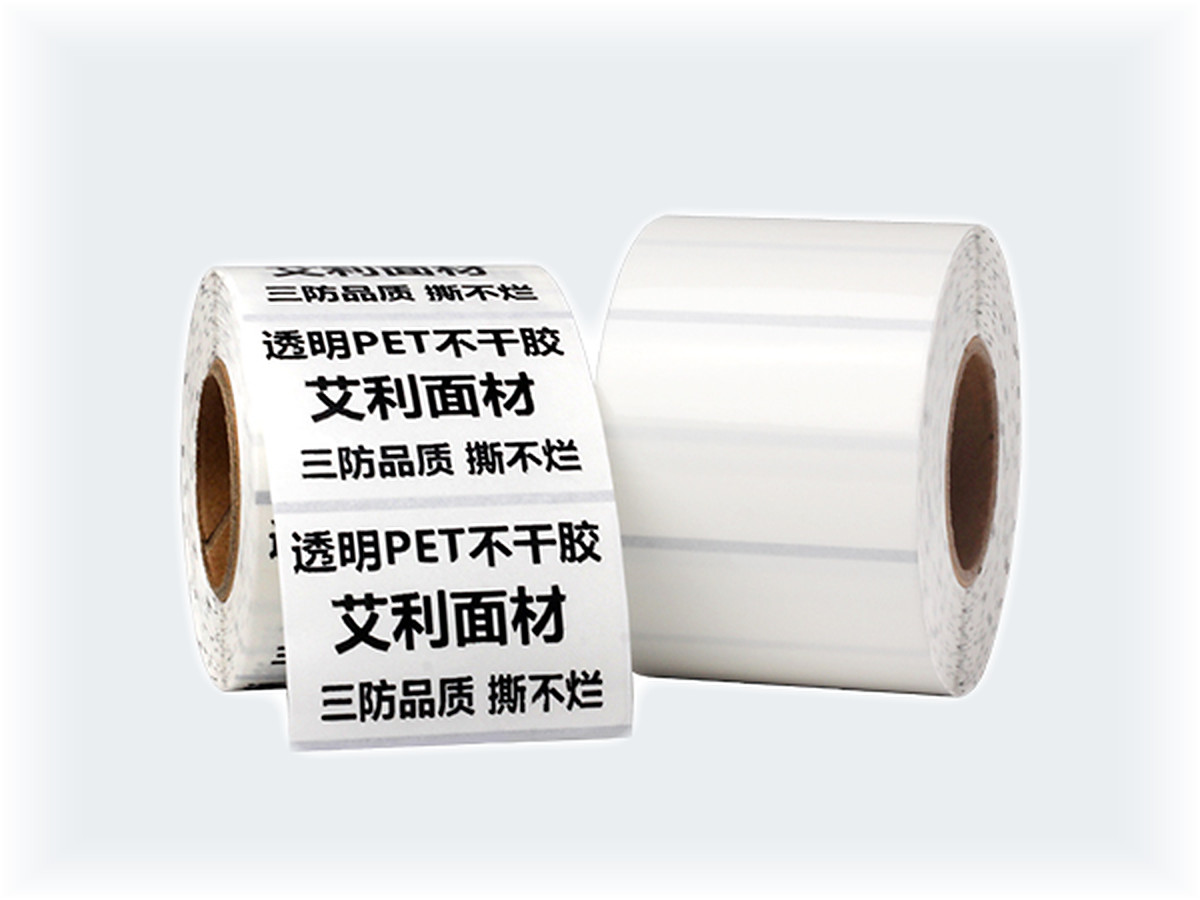
Face stock matters next. In freezing conditions PET or PE holds up. Paper stocks absorb moisture, the fibres swell, and a few temperature cycles leave the sheet wrinkled with lifted edges. Coated paper with a moisture barrier will still struggle above 85 percent relative humidity. PET stays dimensionally stable, while PE follows the deformation of flexible packaging.
Third is cycling. Goods move between the freezer, the dock and the truck, and the adhesive layer contracts and expands each time. Bond strength drops with every cycle. Large labels carry more edge stress, so splitting one big label into two smaller ones often reduces failures.
Before choosing, confirm three numbers: the lowest application temperature, the storage temperature, and how long goods sit at ambient. Then run a real test: three freeze-thaw rounds of 24 hours on actual cartons, checking the corners after each round before committing to a batch.